
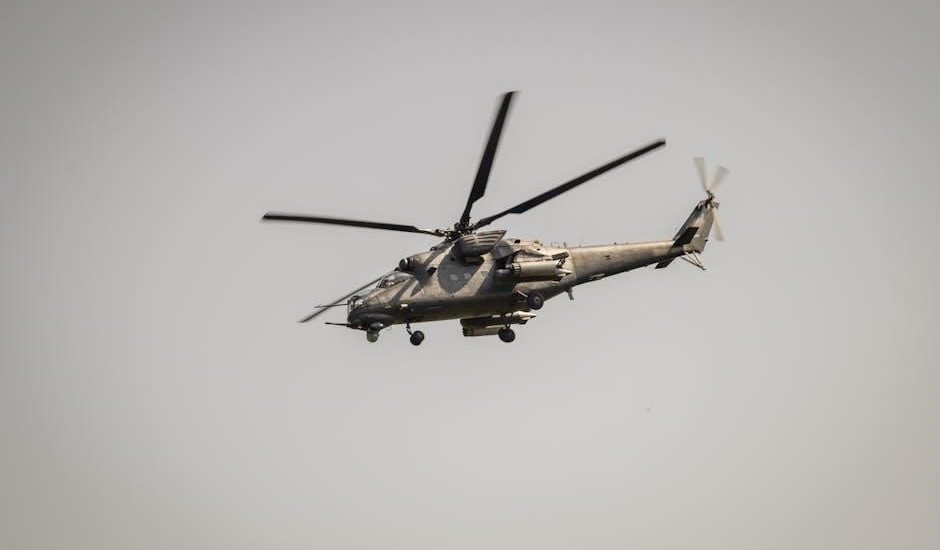
The Russian Aerospace Forces (VKS), formed in 2015, integrate air and space defense.
This unification enhances early warning systems and provides comprehensive aerospace security, as detailed in recent analyses.
Overview of the Russian Aerospace Forces (VKS)
Established on August 1st, 2015, the VKS represents a significant consolidation of Russia’s air and space capabilities. Formerly separate entities, the Air Force and Space Forces were unified to enhance operational synergy and strategic responsiveness. This integration reflects a modern understanding of warfare, acknowledging the interconnectedness of air, space, and ground domains.
The VKS’s core mission, as outlined in the 2014 Russian Military Doctrine, extends beyond traditional air superiority to encompass timely threat assessment and the degradation of potential adversaries. Possessing robust early warning systems – ground-based, airborne, and space-based – the VKS safeguards critical civilian infrastructure and national security interests.
Historical Development of Russian Military Aviation
Russian military aviation boasts a rich history, evolving from its nascent stages in World War I to becoming a formidable force during the Cold War. The Soviet era witnessed rapid advancements in aircraft design and production, prioritizing both quantity and technological innovation. Post-Soviet restructuring presented challenges, including budgetary constraints and the need to modernize aging fleets.
Despite these hurdles, Russia has consistently strived to maintain a capable air arm. The formation of the VKS in 2015 signifies a renewed focus on integrating air and space power, building upon decades of aviation expertise and adapting to the demands of 21st-century warfare.
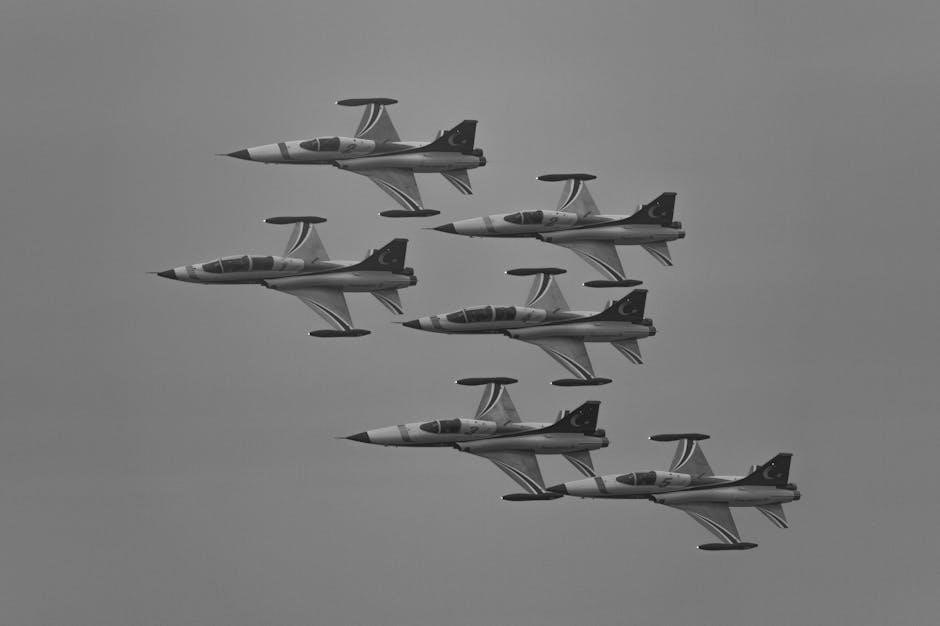
Key Aircraft Types – 4th Generation Fighters
Russia’s VKS relies heavily on 4th-generation fighters like the Su-35 and MiG-35, replacing older Soviet designs. These aircraft provide a powerful edge in regional air superiority.
Sukhoi Su-35 Flanker-E
The Su-35 Flanker-E represents a significant upgrade to the Su-27 family, serving as a cornerstone of the Russian Aerospace Forces’ fighter capabilities. It bridges the gap while the Su-57 program matures, offering advanced maneuverability and a potent array of weaponry.
This multirole fighter excels in both air-to-air and air-to-ground missions, providing a substantial combat advantage.
Its continued deployment demonstrates Russia’s commitment to maintaining a formidable air power presence, particularly against neighboring countries.
Capabilities and Specifications of the Su-35
The Su-35 boasts impressive specifications, including a maximum speed exceeding Mach 2.25 and a combat range of 1,600 miles. Equipped with advanced radar and electronic warfare systems, it can effectively engage multiple targets simultaneously.
Its diverse weapons payload includes air-to-air, air-to-surface missiles, and guided bombs.
These capabilities allow the Su-35 to dominate aerial combat and deliver precision strikes, solidifying its role as a highly capable 4th-generation fighter.
Role in Modern Russian Air Combat Doctrine
The Su-35 plays a crucial role in Russia’s modern air combat doctrine, providing a powerful edge over neighboring countries. It’s designed for both defensive and offensive operations, capable of air superiority and precision strikes.
The VKS utilizes the Su-35 to degrade potential enemy forces and gather timely threat information.
Its capabilities support a strategy focused on aerospace dominance and securing critical infrastructure, reflecting a comprehensive approach to modern warfare.
Mikoyan MiG-35 Fulcrum-F
The MiG-35 represents a significant advancement in Russian fighter technology, designed as a multirole combat aircraft. While the document doesn’t detail specifics, it implies the MiG-35 contributes to the VKS’s modernization efforts, replacing older Soviet-era jets. Its role likely involves enhancing air-to-air and air-to-ground capabilities, supporting both defensive and offensive strategies. Future prospects depend on continued development and integration within the broader VKS framework.
Advanced Features of the MiG-35
Although the provided source lacks detailed specifications, the MiG-35’s advancements are crucial for the VKS. It’s understood to possess enhanced avionics, improved radar systems, and increased operational range compared to previous MiG-29 variants. These features contribute to superior situational awareness and combat effectiveness. The aircraft’s multirole capability allows for flexible deployment in diverse scenarios, bolstering Russia’s air power and supporting its evolving military doctrine within the aerospace domain.
Operational Deployment and Future Prospects
The source material doesn’t detail specific MiG-35 deployments, but it highlights the VKS’s broader modernization efforts. Replacing older Soviet-era aircraft with 4th-generation fighters like the MiG-35 provides a significant capability edge. Future prospects likely involve continued integration of advanced weaponry and potentially, exploring unmanned capabilities. As Russia develops its space policy and modernizes its forces, the MiG-35 will remain a vital component of its air combat strength, securing regional dominance.
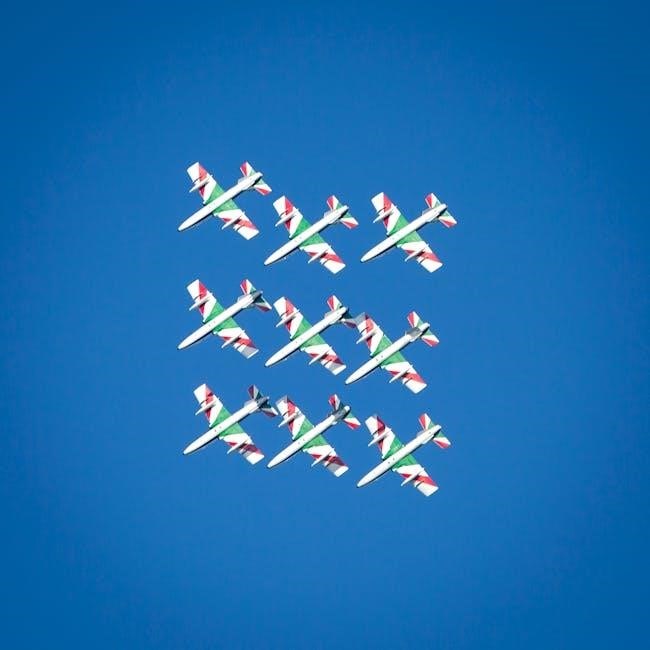
Key Aircraft Types – Fighter-Bombers & Attack Aircraft
The VKS utilizes advanced fighter-bombers like the Su-34 and Su-25, replacing aging Soviet designs. These aircraft deliver precision strikes and close air support capabilities.
Sukhoi Su-34 Fullback
The Su-34 Fullback stands out due to its distinctive flattened cockpit and side-by-side seating arrangement for the crew, a unique design element. This fighter-bomber excels in precision strike roles, boasting a substantial payload capacity for diverse munitions.
It’s a key component of the VKS modernization efforts, replacing older platforms. The Su-34’s capabilities allow for effective degradation of potential enemy forces, as outlined in the Russian Military Doctrine. Its advanced systems contribute to enhanced operational effectiveness and strategic reach within the aerospace forces.
Su-34’s Unique Design and Capabilities
The Su-34’s most striking feature is its flattened cockpit, providing superior visibility and crew comfort during long-duration missions. Its side-by-side seating configuration is also unusual for a fighter-bomber. This design supports enhanced crew coordination. The aircraft’s robust construction allows it to operate in contested airspace.
It’s equipped with advanced avionics for precision targeting and navigation, contributing to its effectiveness in delivering both conventional and potentially specialized payloads, bolstering the VKS’s offensive capabilities.
Precision Strike Role and Payload Capacity
The Su-34 excels in precision strike missions, capable of employing a wide array of guided and unguided munitions. Its substantial internal and external payload capacity—over eight tons—enables it to carry diverse ordnance. This includes cruise missiles, bombs, and rockets, allowing for flexible mission profiles. The aircraft’s advanced targeting systems ensure accurate delivery, minimizing collateral damage.
Its role is crucial for degrading enemy defenses and supporting ground operations, demonstrating the VKS’s potent strike capabilities.
Sukhoi Su-25 Frogfoot
The Su-25 Frogfoot is a dedicated close air support and ground attack aircraft, renowned for its ruggedness and low-level flight capabilities. Designed for operations in contested airspace, it provides direct support to ground forces. Its robust construction allows it to withstand significant battle damage. Modernization programs continually enhance its avionics and weapon systems, extending its operational lifespan. The Su-25 remains a vital asset for the VKS, delivering effective firepower and tactical flexibility on the battlefield.
Close Air Support and Ground Attack Capabilities
The Su-25 excels in providing close air support, directly aiding ground troops with immediate firepower. Its design prioritizes survivability in low-altitude, high-threat environments. Equipped with a diverse range of ordnance, including rockets, bombs, and a 30mm cannon, it effectively engages armored vehicles and infantry. The Frogfoot’s capabilities are crucial for suppressing enemy defenses and enabling offensive maneuvers. Continuous upgrades ensure its relevance in modern combined-arms warfare, bolstering ground force effectiveness.
Modernization Programs for the Su-25
Ongoing modernization efforts aim to extend the Su-25’s operational lifespan and enhance its combat effectiveness. These programs include integrating new avionics, precision-guided munitions, and advanced targeting systems. Upgraded variants, like the Su-25SM, feature improved navigation and communication suites. Further enhancements focus on bolstering armor protection and incorporating digital cockpit displays. These upgrades ensure the Su-25 remains a potent close air support asset, capable of addressing evolving battlefield challenges and maintaining relevance within the VKS.
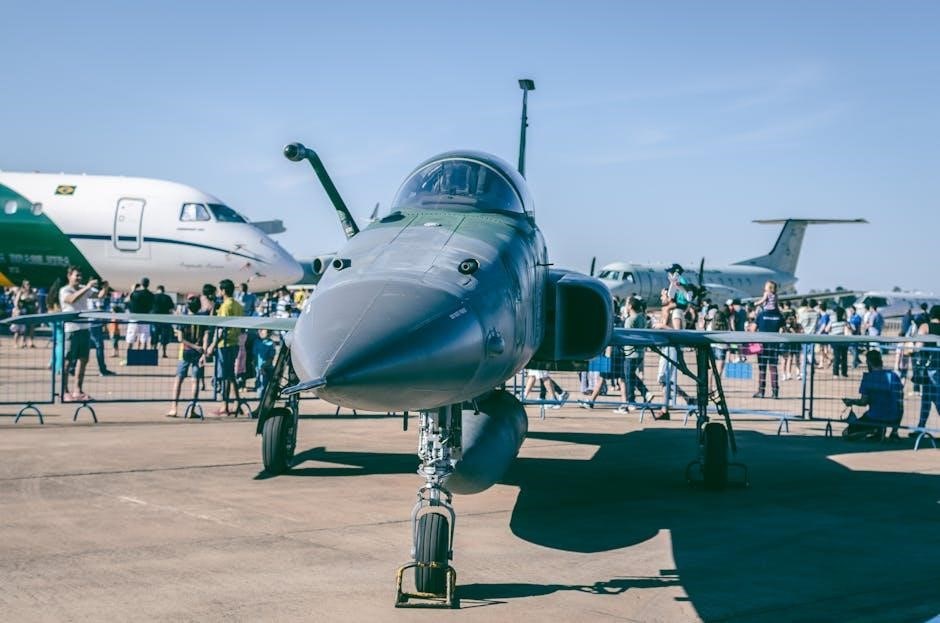
Strategic Bombers
Russia’s strategic bomber fleet, including the Tu-160 and Tu-95, provides long-range capabilities. These aircraft serve as key components of Russia’s nuclear and conventional deterrent forces.
Tupolev Tu-160 Blackjack
The Tu-160 Blackjack stands as the world’s largest and heaviest supersonic strategic bomber, representing a significant achievement in Soviet aerospace engineering. Its variable-geometry wings enable high-speed performance and efficient flight across vast distances. This formidable aircraft is capable of carrying both nuclear and conventional weaponry, fulfilling a crucial role in Russia’s strategic deterrence posture.
The Blackjack’s design prioritizes both speed and payload capacity, allowing it to penetrate enemy airspace and deliver devastating strikes. Modernization efforts continue to enhance its capabilities, ensuring its relevance in contemporary warfare scenarios.
Characteristics of the Tu-160 – World’s Largest Supersonic Bomber
The Tupolev Tu-160 distinguishes itself as the largest and heaviest supersonic bomber ever constructed, boasting a maximum takeoff weight exceeding 267,600 kg. Its variable-geometry wings, a defining feature, allow for optimized performance at both subsonic and supersonic speeds. Powered by four Kuznetsov NK-321 engines, it achieves a maximum speed of Mach 2.05.
The aircraft’s immense size accommodates a substantial payload, and its range enables global reach, solidifying its position as a cornerstone of Russia’s long-range strategic bombing capabilities.
Nuclear and Conventional Capabilities
The Tu-160 Blackjack is designed as a strategic missile carrier, capable of deploying nuclear-armed cruise missiles, significantly contributing to Russia’s nuclear triad. It can carry up to 12 Kh-55SM or Kh-101/Kh-102 cruise missiles, offering both standoff and precision strike options.
Beyond its nuclear role, the Tu-160 can also carry conventional weaponry, enhancing its versatility for non-nuclear strategic operations and demonstrating a flexible deterrent capability.
Tupolev Tu-95 Bear
The Tu-95 Bear remains a cornerstone of Russia’s long-range strategic deterrent, despite its age. This turboprop-powered bomber is primarily designed to launch cruise missiles, including the Kh-55 and Kh-101/102, providing a substantial standoff strike capability.
Modernized variants continue in service, benefiting from upgraded navigation and targeting systems, ensuring its relevance in contemporary warfare. The Tu-95’s endurance and payload capacity solidify its role in Russia’s strategic arsenal.
Long-Range Strategic Deterrent
The Tupolev Tu-95 functions as a crucial component of Russia’s nuclear triad, serving as a long-range strategic deterrent. Its primary mission involves delivering nuclear-armed cruise missiles, ensuring a retaliatory strike capability against potential adversaries. This aircraft’s operational range allows it to patrol vast distances,
maintaining a constant presence and demonstrating Russia’s commitment to strategic stability. Modernized versions enhance its effectiveness, solidifying its role in Russia’s defense posture.
Modernized Variants and Continued Service
Despite its age, the Tupolev Tu-95 continues to serve within the Russian Aerospace Forces, undergoing consistent modernization programs to extend its operational lifespan and enhance its capabilities. These upgrades focus on improving avionics, engine efficiency, and weapons systems integration.
The Tu-95MS variant, equipped with long-range cruise missiles, remains a cornerstone of Russia’s strategic deterrence. Continued service demonstrates the aircraft’s reliability and cost-effectiveness, ensuring its relevance in future military operations.
Transport Aircraft
Russia relies on the Ilyushin Il-76 and Antonov An-124 for strategic airlift, providing crucial military logistics and global reach for deployments.
Ilyushin Il-76 Candid
The Ilyushin Il-76 Candid is a versatile, four-engine turbofan strategic military transport aircraft. It’s renowned for its capability to operate from unpaved runways, making it invaluable for delivering troops and cargo to remote locations. This aircraft provides substantial strategic airlift capabilities for the Russian Aerospace Forces (VKS). Numerous variants exist, adapted for diverse roles including airborne early warning and control (AEW&C) and aerial refueling.
Operational use encompasses a wide spectrum, from humanitarian aid delivery to large-scale military exercises, demonstrating its adaptability and enduring importance within the Russian military framework.
Strategic Airlift Capabilities
The Il-76 Candid provides Russia with crucial strategic airlift capabilities, enabling rapid deployment of personnel and equipment globally. Its substantial cargo capacity and robust design allow for the transport of oversized loads and operation in challenging environments. This capability is vital for maintaining a global military presence and responding swiftly to crises.
The aircraft’s ability to utilize austere airfields further enhances its strategic value, bypassing established logistical hubs and projecting power directly where needed, bolstering Russia’s operational reach.
Variants and Operational Use
The Ilyushin Il-76 exists in numerous variants, including the Il-76MD, optimized for military transport, and the Il-76T, a civilian freighter adapted for military roles. Operational use spans a wide spectrum, from delivering humanitarian aid and peacekeeping forces to transporting heavy military equipment and conducting aerial refueling missions.
The Il-76’s versatility makes it a cornerstone of Russian military logistics, supporting both domestic operations and power projection abroad, demonstrating its enduring relevance in modern warfare scenarios.
Antonov An-124 Ruslan
The Antonov An-124 Ruslan is a strategic heavy-lift transport aircraft, renowned for its exceptional cargo capacity and global reach. It facilitates the movement of oversized and outsized military equipment, including tanks, armored vehicles, and helicopters, across intercontinental distances.
Its role in military logistics is paramount, enabling rapid deployment of forces and supplies to remote locations. The Ruslan’s capabilities significantly enhance Russia’s power projection and responsiveness in international crises.
Heavy-Lift Transport and Global Reach
The Antonov An-124 Ruslan excels in heavy-lift transport, capable of carrying up to 150 tonnes of cargo internally. This capability allows for the swift deployment of substantial military assets globally, bypassing logistical constraints typically associated with large-scale operations.
Its extended range and payload capacity make it invaluable for humanitarian aid, peacekeeping missions, and rapid response scenarios, solidifying Russia’s ability to project power and influence internationally.
Role in Military Logistics
The Ilyushin Il-76 Candid is a cornerstone of Russian military logistics, facilitating the transport of personnel, equipment, and supplies to remote or austere locations. Its strategic airlift capabilities are crucial for maintaining operational readiness and supporting deployed forces across vast distances.
Various Il-76 variants cater to specialized needs, enhancing its versatility within the Russian military’s logistical framework, ensuring efficient and timely delivery of essential resources.
Helicopters
Russian military helicopters, like the Mi-28 and Ka-52, provide crucial attack capabilities. They are equipped with advanced armament and targeting systems for effective combat performance.
Mil Mi-28 Havoc
The Mil Mi-28 Havoc is a formidable Russian attack helicopter designed for destroying armored vehicles and providing fire support to ground troops. Its robust design incorporates advanced armor protection, enhancing survivability in contested environments. Equipped with a variety of weaponry, including anti-tank guided missiles, cannons, and unguided rockets, the Havoc delivers substantial firepower.
Sophisticated targeting systems, including optical and infrared sensors, enable precise engagement of targets day or night. The Mi-28’s primary role centers around direct combat support, effectively neutralizing enemy fortifications and personnel. It represents a key component of the Russian Army’s helicopter fleet.
Attack Helicopter Capabilities
Russian attack helicopters, like the Mi-28 Havoc and Ka-52 Alligator, excel in anti-tank warfare and close air support. They possess potent firepower, utilizing guided and unguided munitions to neutralize ground targets effectively. Advanced targeting systems, incorporating optical and infrared sensors, ensure precision engagement in all weather conditions.
These helicopters demonstrate exceptional maneuverability and survivability, crucial for operating in complex battlefield environments. Their capabilities extend to reconnaissance, providing valuable intelligence to ground forces, and disrupting enemy movements, solidifying their role as a vital asset.
Armament and Targeting Systems
Russian attack helicopters are equipped with a diverse array of weaponry, including anti-tank guided missiles (ATGMs), unguided rockets, and cannon systems. The Ka-52 Alligator notably employs the Vikhr ATGM, offering long-range precision strike capabilities. Advanced targeting systems, integrating optical-electronic sensors and laser designators, enhance accuracy.
These systems enable effective engagement of both stationary and moving targets, day or night. Modernization efforts focus on integrating new munitions and improving sensor performance, bolstering the helicopters’ combat effectiveness and survivability on the modern battlefield.
Kamov Ka-52 Alligator
The Kamov Ka-52 Alligator is a formidable Russian attack helicopter renowned for its coaxial rotor system, providing exceptional maneuverability and stability. This unique design enhances its hovering capabilities and allows for rapid changes in direction during combat. It’s designed for anti-tank warfare and provides fire support to ground forces.
The Alligator boasts advanced armor protection and a sophisticated self-defense suite, increasing survivability. Its combat performance is highly regarded, making it a key asset within the Russian Aerospace Forces’ helicopter fleet.
Coaxial Rotor System and Combat Performance
The Ka-52’s coaxial rotor system is central to its exceptional combat performance, eliminating the need for a tail rotor and significantly boosting maneuverability. This configuration allows for quick turns and precise hovering, crucial for engaging targets effectively. The design contributes to increased stability, even under heavy fire or challenging weather conditions.
This advanced system, coupled with robust armor and powerful weaponry, makes the Alligator a highly effective attack helicopter, capable of dominating the battlefield and providing vital support to ground troops.
Role in Anti-Tank Warfare
The Kamov Ka-52 Alligator excels in anti-tank warfare, employing a diverse arsenal of guided missiles. These include the Vikhr and the more advanced Khrizantema, capable of defeating modern reactive armor. Its sophisticated targeting systems, incorporating both optical and radar sensors, ensure high precision strikes against armored vehicles.
The helicopter’s coaxial rotor system enhances its stability during engagements, allowing for accurate missile launches even while maneuvering. This makes the Ka-52 a formidable threat to enemy tank formations.
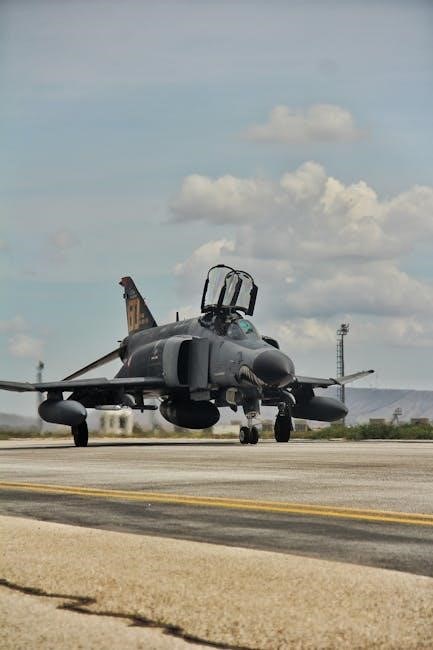
Emerging Technologies & 5th Generation Programs
Russia’s Su-57 program faces development challenges, yet aims for stealth capabilities. Simultaneously, investment in unmanned combat aerial vehicles (UCAVs) is rapidly increasing.
Sukhoi Su-57 Felon
The Su-57 represents Russia’s foray into 5th-generation fighter technology, though its development has encountered notable hurdles. Despite these challenges, the program persists, aiming to deliver a platform with reduced radar cross-section and enhanced maneuverability. Current efforts focus on refining stealth characteristics and integrating advanced avionics.
The Su-57’s future enhancements are crucial, as Russia seeks to bridge the technological gap with Western counterparts. While facing difficulties acquiring full stealth capabilities, the Su-57 remains a key component of the VKS modernization strategy, representing a significant investment in future air combat dominance.
Development and Challenges of the Su-57 Program
The Su-57’s development has been protracted and marked by challenges, particularly in achieving true fifth-generation stealth capabilities. Initial production rates were slow, and the program faced hurdles related to engine development and the integration of advanced materials.
Despite these setbacks, Russia continues to invest in the Su-57, aiming to overcome technical difficulties and accelerate production. Sanctions and limited access to certain technologies have further complicated the program, impacting the timeline for full operational capability and widespread deployment within the VKS.
Stealth Capabilities and Future Enhancements
The Su-57’s stealth characteristics are a key focus, though assessments suggest it doesn’t fully match Western fifth-generation fighters in radar cross-section reduction. Russia is actively pursuing enhancements, including advanced radar-absorbent materials and optimized shaping, to improve its survivability against modern air defenses.
Future upgrades will likely concentrate on sensor fusion, electronic warfare capabilities, and the integration of new weapons systems. Overcoming technological limitations and achieving a higher level of stealth remain central to the Su-57’s long-term viability.
Unmanned Combat Aerial Vehicles (UCAVs)
Russia is actively developing a range of UCAV programs, aiming to augment its manned aircraft capabilities. These initiatives focus on creating versatile platforms for reconnaissance, strike missions, and electronic warfare. Current programs include the ‘Oryx’ and ‘Altius’ projects, showcasing a commitment to unmanned systems.
Future development will prioritize integrating UCAVs with manned aircraft for collaborative combat operations, enhancing situational awareness and expanding operational reach. Achieving seamless integration remains a key objective for the VKS.
Current UCAV Programs and Future Development
Russia’s UCAV development centers on projects like ‘Oryx’ and ‘Altius’, demonstrating a push towards advanced unmanned systems. ‘Oryx’ focuses on a smaller, reconnaissance-oriented platform, while ‘Altius’ aims for a heavier, strike-capable UCAV. Challenges remain in achieving reliable performance and integrating these systems effectively.
Future development will likely emphasize increased autonomy, improved payload capacity, and enhanced stealth characteristics. The VKS seeks to deploy UCAVs alongside manned aircraft, creating a synergistic combat force.
Integration with Manned Aircraft
The Russian VKS envisions UCAVs operating as “loyal wingmen” to manned fighters and bombers, extending their reach and reducing pilot risk. This integration involves data sharing, coordinated targeting, and collaborative mission planning. UCAVs can perform reconnaissance, electronic warfare, and even deliver precision strikes under manned aircraft control.
Successful integration requires robust communication links and standardized protocols. The VKS aims to create a networked combat environment where manned and unmanned assets operate seamlessly, maximizing overall effectiveness.
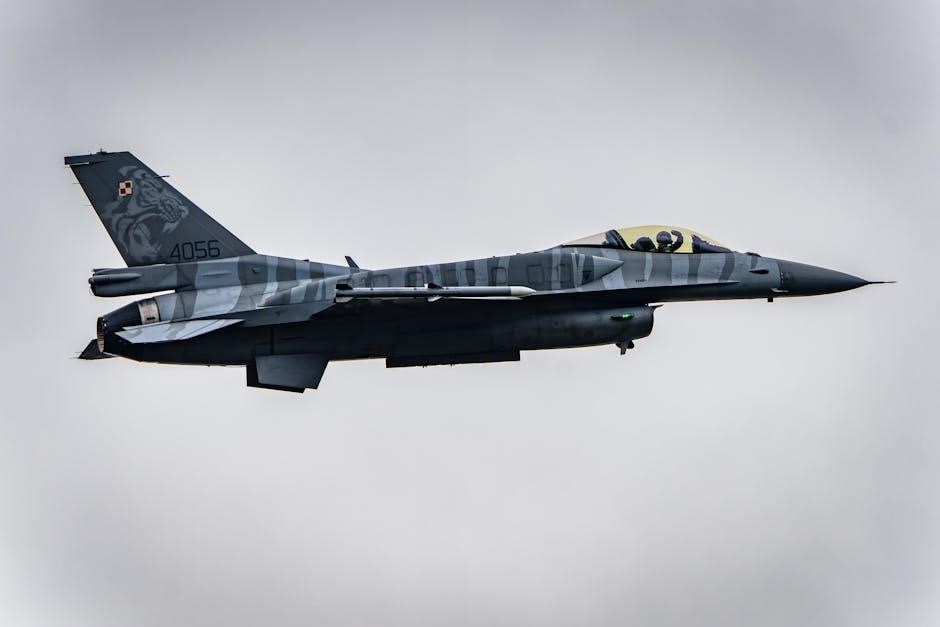
Modernization and Future Outlook
Despite sanctions, Russia continues investing in aerospace modernization, focusing on 4th and 5th-generation fighters like the Su-35 and developing the Su-57 program.
Investment in Aerospace Force Modernization
Russia prioritizes modernizing its Aerospace Forces (VKS), replacing older Soviet-era aircraft with advanced 4th and pursuing 5th-generation platforms. This includes substantial investment in fighters like the Su-35 and fighter-bombers such as the Su-34, bolstering capabilities against regional adversaries.
The VKS’s modernization isn’t solely focused on aircraft; it encompasses space-based assets for early warning and intelligence gathering. Despite economic challenges and international sanctions, Russia remains committed to maintaining a powerful and technologically advanced aerospace defense system, adapting to evolving warfare dynamics.
Impact of Sanctions on Russian Military Aviation
International sanctions pose significant challenges to Russia’s aerospace modernization efforts, restricting access to crucial components and technologies. While Russia demonstrates resilience through domestic production and alternative sourcing, sanctions impede the development of advanced systems like the Su-57.
These restrictions affect the VKS’s ability to fully integrate cutting-edge avionics and engines, potentially slowing down the pace of modernization. Despite these hurdles, Russia continues investing in its aerospace sector, prioritizing self-sufficiency and adapting its strategies to mitigate the impact of sanctions.