
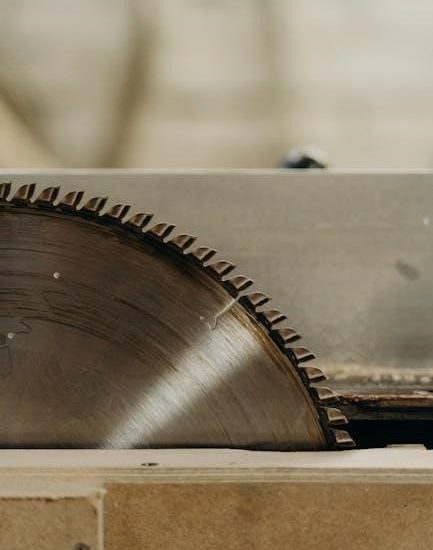
DeWalt DW745 Manual: A Comprehensive Guide
This detailed guide offers free downloads, streaming access, and essential instructions for the DeWalt DW745 table saw, ensuring optimal performance and safety.
The DeWalt DW745 is a popular 10-inch portable table saw, renowned for its robust construction and dependable performance. This manual serves as your primary resource for understanding and safely operating this powerful tool. Whether you’re a seasoned woodworker or a DIY enthusiast, mastering the DW745 requires a thorough grasp of its features and functionalities.
Access to the official instruction manual, readily available online through platforms like the Internet Archive, is crucial. These resources provide detailed guidance, from initial setup and assembly to advanced cutting techniques. Familiarizing yourself with the manual ensures you can maximize the saw’s capabilities while prioritizing safety and achieving precise results in your projects.
Understanding the Manual’s Importance
The DeWalt DW745 manual isn’t merely a collection of instructions; it’s a vital safety document and operational guide. Downloading and reviewing it – resources are available via the Internet Archive – is paramount before initial use. It details critical safety precautions, component identification, and proper assembly procedures, minimizing risks during operation.
Understanding the manual ensures correct usage, preventing damage to the saw and potential injury. It clarifies blade selection, fence adjustments, and miter gauge functionality. Accessing the PDF version (Dewalt DW745 TYPE 1 User Manual, 1305012L) allows for convenient reference during setup and throughout your woodworking endeavors, maximizing the tool’s lifespan and performance.

Safety First: Essential Precautions
Prioritize safety! The DW745 manual emphasizes crucial rules, warnings, and feature understanding to prevent accidents and ensure responsible table saw operation.
General Safety Rules for Table Saws
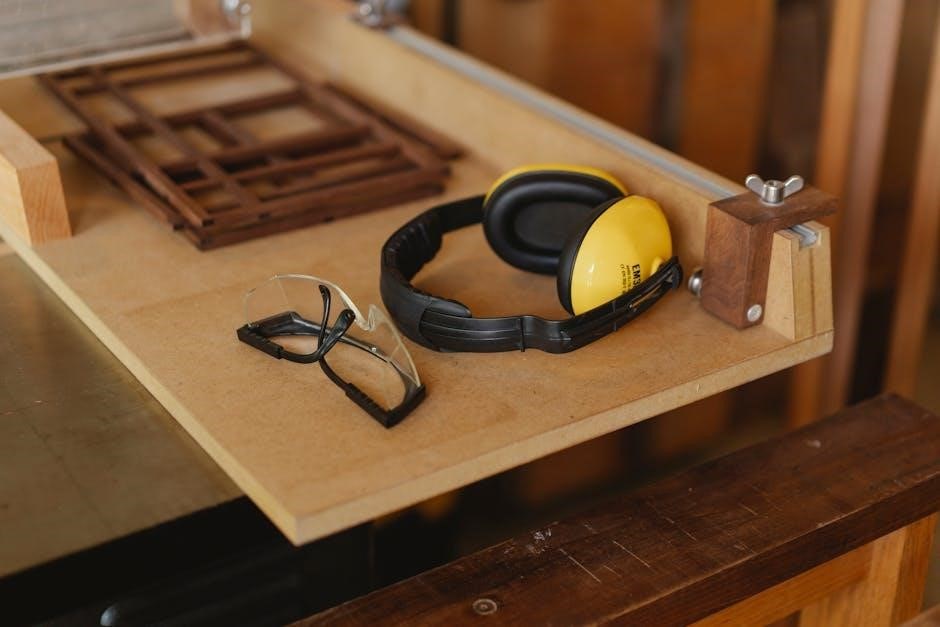
Always read and understand the entire manual before operating the DeWalt DW745. Maintain a clean and well-lit workspace, free from obstructions. Wear appropriate safety gear, including eye and hearing protection, and avoid loose clothing or jewelry. Ensure all safety devices, like the blade guard, are functioning correctly and are in place.
Never reach over or across a running blade. Keep hands clear of the blade path, and use push sticks or blocks for smaller pieces. Disconnect the power source before making adjustments or changing blades. Be aware of kickback potential and stand to the side of the blade. Inspect the blade for cracks or damage before each use. Avoid cutting materials not intended for table saws. Focus solely on the task at hand, avoiding distractions.
Specific Safety Warnings for the DW745
The DeWalt DW745, while robust, demands focused attention to safety. Always verify the blade is securely mounted and rotates in the correct direction. Be mindful of the potential for kickback, especially when ripping wood; use a splitter and anti-kickback pawls. Never remove or bypass safety features.
Ensure the fence is properly aligned and locked before each cut. Avoid applying excessive force to the workpiece. Inspect the power cord regularly for damage, and never operate with a frayed cord. Keep the work area clear of sawdust accumulation, as it presents a fire hazard. Understand the limitations of the saw and avoid attempting cuts beyond its capacity. Regularly check and maintain all adjustments for optimal safety.
Understanding Safety Features
The DeWalt DW745 incorporates several key safety features. A blade guard system minimizes accidental contact with the rotating blade, offering substantial protection. Anti-kickback pawls help prevent the workpiece from being thrown back towards the operator during ripping operations. A splitter reduces pinching and binding, further mitigating kickback risk.
The miter gauge provides accurate angled cuts while maintaining control. Proper fence alignment is crucial for straight, safe cuts. Familiarize yourself with the operation of the emergency stop switch for immediate power shut-off. Regularly inspect these features to ensure they are functioning correctly; damaged or missing components must be replaced before operation. Prioritize understanding and utilizing these safeguards.
Unboxing and Assembly
Carefully unpack all components, referencing the parts list. Follow step-by-step instructions for proper assembly, ensuring secure attachment of legs and stand for stability.
What’s Included in the Box
Upon opening your DeWalt DW745 package, you should find several key components. These typically include the table saw itself, a 24-tooth carbide blade for general purpose cutting, a miter gauge for accurate angled cuts, and a blade guard assembly to enhance safety during operation.
Additionally, the box contains a push stick, crucial for safely guiding materials past the blade, and an operator’s manual providing detailed instructions and safety guidelines. You’ll also find hardware for assembly, including bolts, washers, and potentially leg levelers. Inspect all items carefully against the included parts list to confirm everything is present before beginning assembly. Missing parts should be reported to DeWalt support immediately.
Step-by-Step Assembly Instructions
Begin by attaching the legs to the table saw’s base using the provided bolts and washers, ensuring they are securely tightened. Next, install the fence rails, aligning them precisely with the table surface for accurate rip cuts. Carefully mount the blade guard assembly, verifying its proper function before proceeding.
Then, attach any included extensions or outfeed supports, if desired, to increase your cutting capacity. Double-check all connections for tightness and stability. Refer to the detailed diagrams in the operator’s manual for visual guidance throughout the process. Proper assembly is crucial for safe and efficient operation of your DW745 table saw.
Attaching the Legs and Stand
Begin by carefully unpacking all components, identifying the legs and stand assembly. Align the legs with the designated mounting points on the table saw’s base. Securely fasten each leg using the provided bolts, washers, and nuts, ensuring a snug fit – do not overtighten initially.
Once all legs are attached, gently flip the saw upright. Verify the stand is level and stable on a flat surface. Adjust leg levelers, if equipped, to compensate for uneven flooring. Final tightening of all bolts should occur after the saw is fully upright and stable. A properly attached stand is vital for safe operation.

Components and Features
Explore the DW745’s key parts, blade options, fence adjustments, miter gauge, and rip capacity – understanding these features unlocks its full potential.
Overview of Key Parts
The DeWalt DW745 boasts several crucial components for precise and efficient cutting. These include the robust cast iron table, providing a stable work surface, and the powerful 15-amp motor driving the 10-inch blade. Familiarize yourself with the blade height and bevel adjustment wheels, essential for versatile cuts.
The fence system, critical for rip cuts, features a rack-and-pinion mechanism for smooth and accurate adjustments. Don’t overlook the miter gauge, used for precise angled cuts. The blade guard assembly, a vital safety feature, protects the operator. Understanding the function of each part – from the dust port to the on/off switch – is paramount for safe and effective operation.
Blade Selection and Installation
Choosing the right blade is crucial for optimal performance with the DW745. Consider the material you’ll be cutting – wood, plywood, or non-ferrous metals – and select a blade with the appropriate tooth count and kerf. Always ensure the blade is compatible with the saw’s arbor size (5/8 inch).
Installation requires disconnecting the power and using the provided wrenches. Loosen the arbor nut, remove the blade flange, and carefully mount the new blade, ensuring it’s facing the correct direction. Secure the flange and tighten the arbor nut to the specified torque. Always verify blade stability before powering on the saw.
Fence System and Adjustments
The DW745’s fence system is vital for accurate rip cuts. It features a rack-and-pinion mechanism for smooth adjustments. Before use, verify the fence is parallel to the blade; any misalignment impacts cut accuracy. Loosen the fence lock knobs to reposition, then firmly tighten to secure it in place.
Fine-tuning adjustments are possible via the fence’s micro-adjustment wheel, allowing for precise incremental changes. Regularly check for fence play and tighten any loose components. Proper fence alignment and secure locking are paramount for safe and precise woodworking with the DeWalt DW745 table saw.
Miter Gauge Functionality
The DW745’s miter gauge facilitates accurate angled cuts. It slides within the table saw’s miter slots, providing stability and control. Adjust the miter angle using the gauge’s adjustable knob, referencing the degree markings for precise settings. Always ensure the miter gauge is securely locked before initiating a cut.
For crosscuts, hold the workpiece firmly against the gauge. Never use the miter gauge for ripping operations, as this can be dangerous. Regularly inspect the miter gauge for wear and tear, and clean the miter slots to ensure smooth operation. Proper use enhances the DW745’s versatility.
Rip Capacity and Extensions
The DeWalt DW745 boasts a substantial rip capacity, allowing for efficient processing of wider workpieces. The standard rip capacity is designed for common cutting tasks, but can be significantly expanded with optional rip capacity extensions. These extensions attach to the table, providing increased support and enabling cuts on larger materials.
When utilizing extensions, ensure they are securely fastened and properly aligned with the table surface. Always prioritize stability and safety. Refer to the manual for specific extension installation instructions and weight limits. Maximizing rip capacity enhances the saw’s functionality for diverse projects.

Operating Instructions
Proper operation involves powering the saw on/off, making precise straight, miter, and bevel cuts, and consistently utilizing the blade guard system for safety.
Powering On and Off
Before powering on the DeWalt DW745, ensure the blade is properly installed and all safety guards are in place. Verify the power switch is in the “off” position. Connect the saw to a grounded electrical outlet meeting the specified requirements – typically 120V.
To start the saw, firmly depress the power switch. Avoid abrupt starts; allow the blade to reach full speed before commencing any cutting. To stop, release the power switch.
Never disconnect the power cord by pulling on the cord itself. Always grasp the plug. Be mindful of the potential for kickback and maintain a secure grip throughout operation. Always allow the blade to completely stop before making adjustments or leaving the saw unattended.
Making Straight Cuts
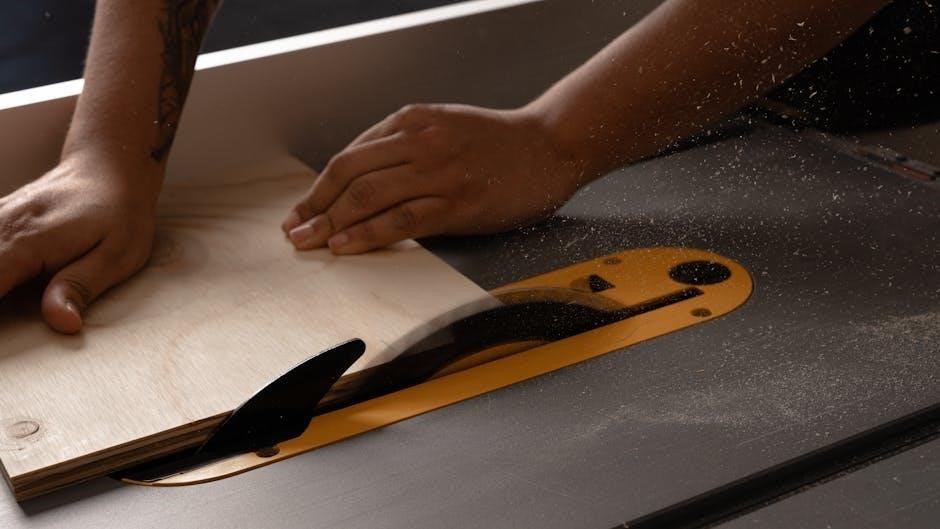
For accurate straight cuts with the DeWalt DW745, ensure the fence is securely locked in the desired position. Verify the fence is parallel to the blade using a measuring tape at both the front and rear of the table. Feed the workpiece against the fence with consistent pressure.
Maintain a firm grip on the material throughout the cut, preventing any shifting or binding. Avoid forcing the material through the blade; let the blade do the work. Use a push stick for smaller pieces to maintain safe hand positioning.
Double-check your measurements and fence alignment before each cut to minimize errors and ensure consistent results. A smooth, controlled feed rate is crucial for clean, accurate cuts.
Performing Miter Cuts
To execute miter cuts on the DeWalt DW745, loosen the miter lock knob located behind the saw table. Adjust the miter gauge to the desired angle, utilizing the degree markings for precision. Securely tighten the miter lock knob once the angle is set.
Always test the miter angle with scrap wood before cutting your final piece. Ensure the workpiece is firmly supported against the miter gauge throughout the cut. Maintain a consistent feed rate, similar to straight cuts, avoiding excessive force.
For angled cuts exceeding the miter gauge’s range, consider using an extension fence for added support and accuracy. Regularly check the miter gauge’s calibration for optimal performance.
Bevel Cutting Techniques
Achieving bevel cuts on the DeWalt DW745 involves tilting the blade. Locate the bevel lock knob at the rear of the saw and loosen it. Adjust the blade angle using the bevel scale, ensuring it’s securely set at the desired degree; Retighten the bevel lock knob firmly.
Prior to cutting, always perform a test cut on scrap material to verify the angle’s accuracy. Support the workpiece adequately, as bevel cuts can introduce instability. Maintain a steady feed rate, avoiding binding or kickback.
Remember that bevel cuts reduce the effective height of the blade; adjust your fence accordingly. Regularly inspect the bevel scale for accurate readings.
Using the Blade Guard System
The DeWalt DW745 features a blade guard system crucial for operator safety. Ensure the guard is always in place unless performing a non-through cut that necessitates its removal. The split-ring guard provides maximum visibility while minimizing exposure to the blade.
Adjust the guard height to closely follow the workpiece, offering optimal protection. Utilize the anti-kickback pawls, which help prevent material from being thrown back towards the operator. Regularly inspect the guard and pawls for damage or wear.
Never disable or bypass the blade guard system; it’s a vital safety component. Familiarize yourself with the quick-release mechanisms for necessary adjustments.
Maintenance and Troubleshooting
Regular cleaning, blade upkeep, and addressing common issues like belt replacements are vital for maintaining peak performance of your DeWalt DW745 table saw.
Regular Cleaning Procedures
Maintaining a clean DeWalt DW745 is crucial for accuracy and longevity. Always disconnect the power cord before any cleaning. Regularly remove sawdust and debris from the table surface, blade guard, and internal components using a shop vacuum. Avoid compressed air, as it can push dust into sensitive areas.
Periodically inspect the fence rails and miter slots, cleaning them with a brush and lubricant to ensure smooth operation. Wipe down the exterior surfaces with a damp cloth. Never use harsh chemicals or solvents, as they can damage the finish. A clean saw operates more efficiently and safely, reducing the risk of kickback and ensuring precise cuts. Consistent cleaning extends the life of your DW745.
Blade Changes and Maintenance
Safe blade changes are paramount. Disconnect power and ensure the blade has completely stopped. Use the provided wrench to loosen the arbor nut, then carefully remove the blade. Clean the arbor and blade mounting surfaces thoroughly. Inspect blades for damage – cracks, missing teeth, or dullness – and replace as needed.
When installing a new blade, ensure it’s the correct type and size for your application. Tighten the arbor nut securely, but avoid over-tightening. Regularly check blade sharpness; a dull blade increases the risk of kickback. Proper blade maintenance ensures clean, accurate cuts and extends the blade’s lifespan, contributing to overall saw performance.
Troubleshooting Common Issues
If the saw won’t start, check the power cord, circuit breaker, and switch. A humming sound without rotation suggests a potential motor issue or obstruction. For inaccurate cuts, verify fence alignment and blade squareness to the table. Excessive vibration can indicate a loose blade or damaged bearings – inspect and tighten accordingly.
Kickback prevention requires proper blade guard usage and feed rate control. If experiencing kickback, immediately stop the saw and reassess your cutting technique. Burning smells often signal excessive friction, potentially from a dull blade or improper feed rate. Always consult the manual for detailed troubleshooting steps and safety precautions.
Belt Replacement Guide
Before starting, disconnect the power cord! Access the belt by removing the lower blade cover and motor cover. Note the belt routing – a diagram in the manual is crucial. Loosen the motor mount bolts to create slack for belt removal. Carefully remove the old belt, avoiding damage to pulleys.
Install the new belt, ensuring proper routing around the motor and blade pulleys. Re-tension the belt by adjusting the motor position and tightening the mount bolts. Verify belt alignment and tension before reassembling the covers. A properly tensioned belt will minimize slippage and ensure optimal saw performance. Refer to the manual for specific belt part numbers.

Technical Specifications
Key details include dimensions, weight, motor specifications (horsepower, voltage), and electrical requirements for the DeWalt DW745, aiding informed operation and setup.
Dimensions and Weight
Understanding the physical characteristics of the DeWalt DW745 is crucial for workspace planning and portability considerations. While precise figures can vary slightly based on included accessories, the table saw generally boasts substantial dimensions reflecting its robust build. Expect a considerable footprint, demanding adequate floor space for safe and efficient operation.
The weight is also a significant factor, typically exceeding 90 pounds. This heft contributes to stability during demanding cuts but necessitates careful handling during transport or relocation. Users should employ appropriate lifting techniques or seek assistance to prevent injury. Detailed dimensional specifics, including length, width, and height, are readily available within the official DeWalt DW745 owner’s manual for precise measurements.
Motor Specifications
The DeWalt DW745 is powered by a robust 15 Amp motor, delivering the necessary power for tackling a wide range of cutting tasks. This motor generates a horsepower rating suitable for both hobbyist and professional applications, providing consistent performance even under load. The motor operates on standard 120V electrical supply, a common voltage found in most workshops.
Its design prioritizes both power and durability, ensuring a long service life with proper maintenance. The motor’s speed, typically around 3,850 RPM, is optimized for clean and accurate cuts across various wood types. Detailed motor specifications, including no-load speed and electrical phase, are documented in the official DeWalt DW745 manual for comprehensive technical information.
Electrical Requirements
The DeWalt DW745 table saw is designed to operate on a standard 120-volt, 60 Hz electrical circuit. A dedicated 15-amp circuit is highly recommended to prevent tripping breakers, especially when running the saw under heavy load or in conjunction with other power tools. Ensure the outlet is properly grounded to minimize the risk of electrical shock.
Using extension cords is discouraged whenever possible; however, if necessary, utilize a heavy-duty, 12-gauge extension cord that is rated for outdoor use and has a sufficient length to reach the saw without straining. Always consult the DeWalt DW745 manual for specific electrical safety guidelines and recommendations to ensure safe and reliable operation.
Warranty Information
DeWalt provides warranty coverage for the DW745, details of which are found in the manual; claims are made through DeWalt support channels.
DeWalt Warranty Coverage
DeWalt stands behind its products, and the DW745 table saw is no exception. Standard warranty coverage typically includes defects in materials and workmanship for a specified period from the date of purchase. This coverage doesn’t extend to components affected by normal wear and tear, misuse, abuse, or improper maintenance.
The length of the warranty can vary depending on the region and registration status; registering your tool promptly often extends the coverage. Proof of purchase is essential for any warranty claim. DeWalt’s warranty doesn’t cover accessories or damage resulting from unauthorized repairs or modifications. Always refer to the official DeWalt warranty statement included with your DW745 for the most accurate and up-to-date information.
How to Claim Warranty Service
To initiate a warranty claim for your DeWalt DW745, first locate your original purchase receipt as proof of date and location. Contact DeWalt customer support via their website or phone number – details are readily available online. You’ll likely need to describe the defect and may be asked to provide photos or videos demonstrating the issue.
DeWalt will then provide instructions, potentially including shipping the tool to an authorized service center. Ensure the tool is securely packaged to prevent further damage during transit. Warranty service typically covers repair or replacement of the defective part, at DeWalt’s discretion. Remember to retain all documentation related to your claim.
Contacting DeWalt Support
For assistance with your DeWalt DW745, several avenues of support are available. DeWalt’s official website provides a comprehensive FAQ section and access to downloadable manuals, including the DW745 instruction manual. You can also reach their customer service team via phone; numbers are listed on their website, varying by region.
Live chat support is often available for quick issue resolution. Furthermore, DeWalt maintains an active presence on social media platforms, offering another channel for inquiries. When contacting support, have your model number (DW745) and serial number readily available to expedite the process and ensure accurate assistance with any warranty or technical concerns.