
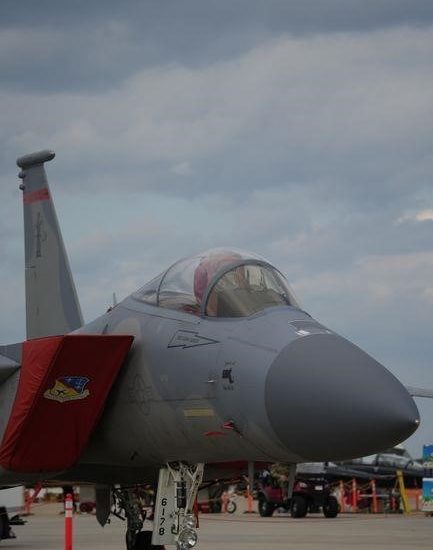
The F‑15E Strike Eagle Manual offers pilots comprehensive guidance on operations, systems, and mission planning. First published in 1990, the 660‑page unclassified volume covers flight procedures, avionics, weapons integration, and command authority, serving as a key reference for pilots and historians alike.
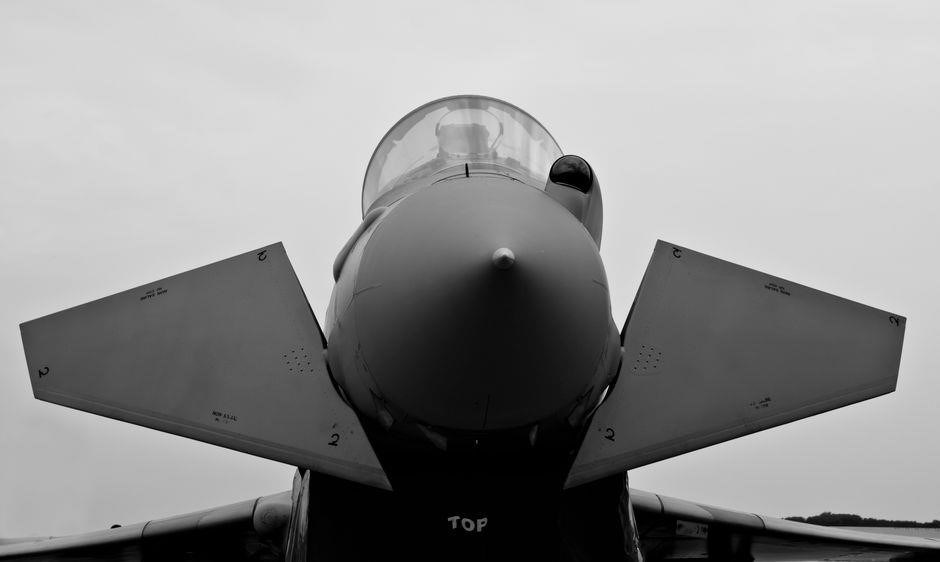
Historical Development and Publication History
The F‑15E Strike Eagle Manual traces its origins to the early 1990s, when the U.S. Air Force sought a consolidated reference for the dual‑role fighter’s complex systems. The first edition, released in 1990, comprised 660 pages of unclassified material, designed to support pilots, instructors, and maintenance crews. Subsequent revisions reflected evolving operational experience and technological upgrades, including the integration of the Advanced Tactical Fighter (ATF) avionics suite and the AGM‑154 Joint Standoff Weapon. Each new edition added chapters on mission planning, air‑to‑air and air‑to‑ground tactics, and expanded the pilot‑in‑command authority section to reinforce safety culture. The manual’s publication history mirrors the aircraft’s service life: a 1995 update incorporated the first operational deployment of the F‑15E in the Gulf War, while a 2003 edition addressed lessons learned from the Iraq conflict and introduced the Enhanced Tactical Fighter (ETF) modifications. In 2010, the Air Force published a digital PDF version, making the manual widely accessible to training units worldwide. The most recent 2024 edition includes updated guidance on the F‑15E Block 20/30 upgrades, new radar modes, and revised weapons loadout procedures. Throughout its lifecycle, the manual has remained a cornerstone of F‑15E pilot training, ensuring that each pilot has authoritative, up‑to‑date information at their fingertips. The manual is distributed through the Air Force Instruction system and is available to all active duty, reserve, and Air National Guard units. It also serves as the baseline for the F‑15E training syllabus, with each flight instructor referencing the latest edition to ensure compliance with current tactics and safety procedures. The manual’s legacy continues as it is periodically reviewed by the Flight Standards Board and updated to incorporate new mission concepts, such as low‑observable flight profiles and advanced electronic warfare countermeasures.
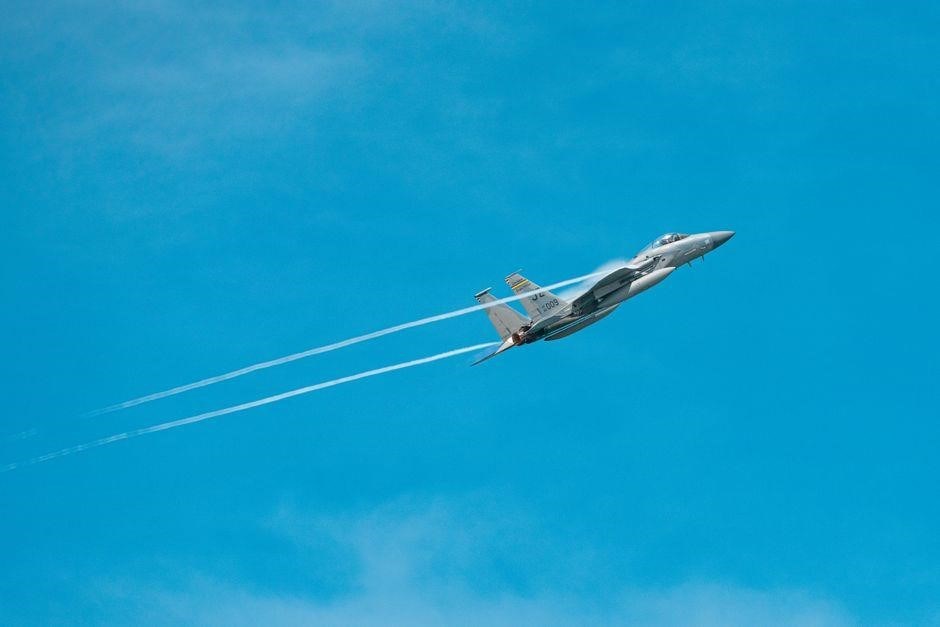
Manual Structure and Volume Organization
The manual is split into three volumes. Volume 1 covers operational procedures, flight rules, and pre‑flight checks. Volume 2 details systems, avionics, and maintenance. Volume 3 offers pilot guidance, tactics, and command‑authority policies. Volume titles referenceup.
3.1 Volume 1: Operational Procedures
Volume 1 of the F‑15E Strike Eagle Manual concentrates on the procedural framework that pilots must master to conduct missions safely and effectively. The section opens with a concise pre‑flight checklist that verifies system status, fuel and weapons load, and environmental data. Following this, the manual walks through the core flight phases—take‑off, climb, cruise, and approach—highlighting the aircraft’s high‑speed envelope, aerodynamic limits, and the importance of maintaining optimal control inputs. Pilots are instructed to monitor air data, engine parameters, and flight control surfaces continuously, with specific thresholds for thrust, angle of attack, and bank angle clearly defined. Emergency procedures are addressed in detail, covering engine failure, hydraulic loss, and weapon release anomalies, and providing step‑by‑step actions to preserve aircraft integrity. The integration of the advanced avionics suite is described, including the use of the Integrated Mission Computer (IMC) for navigation and target acquisition, as well as the coordination of radar and electronic warfare systems during all mission phases. Flight planning guidance is included, detailing how to enter waypoints into the Flight Management System, verify routes against threat databases, and adjust for weather or enemy air defense considerations. The manual also explains the Tactical Data Link (TDL) for real‑time updates from command, emphasizing the need for continuous situational awareness through the Tactical Display and Automatic Targeting System. Weapons release procedures are outlined with precise timing, lock‑on protocols, and safety checks, and troubleshooting tips for common failures are provided. Finally, the section concludes with post‑flight debriefing protocols, stressing data collection for performance analysis and mission review, thereby equipping the pilot with a systematic framework for executing safe, efficient, and mission‑ready operations in a complex combat environment;
3.2 Volume 2: Systems and Equipment
Volume 2 of the F‑15E Strike Eagle Manual delves into the aircraft’s complex array of systems and equipment, providing pilots with the technical knowledge required to maintain operational readiness and troubleshoot in flight. The section begins with an overview of the powerplant, describing the two Pratt & Whitney F100‑PW‑229 engines, their thrust‑recovery capabilities, and the dual‑channel fuel system that supports extended range and high‑g maneuvers. It then details the flight‑control architecture, including the fly‑by‑wire system, digital flight‑control computers, and the redundant hydraulic and electric actuators that ensure stability across all flight envelopes. Next, the manual explains the integrated avionics suite: the Radar Warning Receiver (RWR), the Tactical Targeting System (TTS), and the Integrated Mission Computer (IMC), each of which plays a pivotal role in threat detection, target acquisition, and mission planning. The section also covers the electronic warfare (EW) suite, outlining the operation of the AN/ALQ‑213 and AN/ALQ‑214 jamming pods, their mode selection, and coordination with the aircraft’s self‑protection suite. Detailed diagrams illustrate the wiring harnesses, power distribution, and fault‑diagnostic procedures for each subsystem. The manual provides step‑by‑step instructions for performing routine inspections, pre‑flight checks, and in‑flight troubleshooting, emphasizing the importance of adhering to the maintenance schedule to prevent system failures. Finally, the section discusses the aircraft’s weapons integration, describing how the internal weapons bays, external hardpoints, and the weapons control system interface with the flight‑control and avionics systems to enable precise weapon release and post‑release monitoring. This comprehensive coverage equips pilots with the technical proficiency needed to manage the F‑15E’s sophisticated systems and maintain peak combat effectiveness. This volume is essential for any F‑15E pilot!!
3.3 Volume 3: Authoritative Pilot Guidance
Volume 3 is the definitive source for pilot‑centered procedures, covering flight‑deck operations and emergency protocols. It begins with a PIC authority statement, affirming the PIC’s responsibility for safety and mission success. The section details pre‑flight, take‑off, cruise, and landing sequences, each with checklists that integrate aircraft systems, weapons, and sensor data. Tactical guidance covers target identification, engagement envelopes, and weapon release timing, with instructions for the Tactical Targeting System and Integrated Mission Computer. The manual offers in‑flight decision aids, such as threat assessment matrices and electronic warfare mode charts, enabling pilots to adapt to evolving scenarios. Emergency procedures are fully documented, covering engine failure, hydraulic loss, and electrical faults, with step‑by‑step recovery actions. Appendices provide a glossary, abbreviations, and reference tables for performance, fuel, and weapons data. Throughout, the text stresses situational awareness, adherence to SOPs, and sound judgment under pressure. This volume equips pilots with authoritative guidance to execute complex missions safely and effectively.
Checklists cover the AN/APG‑82 radar init, engine spool‑up, and weapon release timing. An E‑W mode chart guides transition from passive to active jamming. A fuel guide calculates optimal loads for mission profiles, ensuring range compliance.
High‑altitude, low‑visibility missions use APGPS and terrain‑following radar data. The after‑burn procedure for the F100 engines is detailed, with throttle settings and cooling intervals. A post‑flight debrief template logs mission data and lessons learned. Pilots are encouraged to review the appendices before each mission.
Pilot in Command Authority and Responsibilities
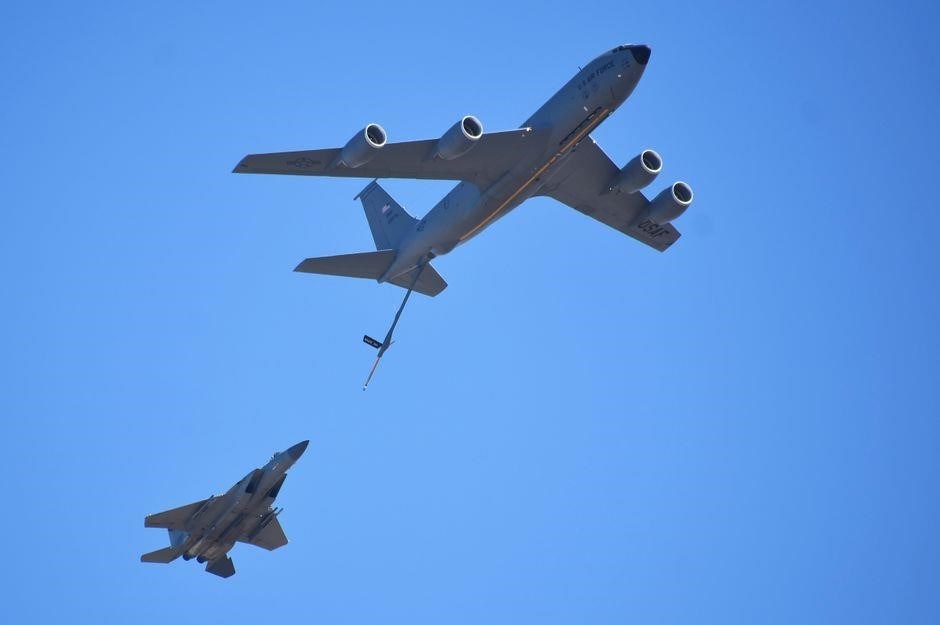
The Pilot in Command (PIC) holds ultimate authority over all aspects of the F‑15E’s operation, regardless of rank. The PIC is responsible for mission planning, execution, and safety, making real‑time decisions that balance tactical objectives with aircraft integrity. The manual’s Authority section outlines the PIC’s duties: establishing flight plans, approving weapons loadouts, and ensuring compliance with Air Force regulations. The PIC must maintain situational awareness, manage crew resources, and enforce standard operating procedures. In emergencies, the PIC directs troubleshooting, system shutdowns, and egress procedures, while coordinating with ground support and other aircraft. The PIC’s authority extends to crew resource management, where the pilot delegates tasks to the weapons officer, sensor operator, or co‑pilot, yet retains final decision rights. The manual emphasizes that the PIC must exercise sound judgment, adhere to mission objectives, and prioritize crew safety. The PIC’s authority is also accountable for post‑flight debriefs, documenting lessons learned, and reporting any anomalies to maintenance and command. This comprehensive responsibility framework ensures that the F‑15E operates safely, effectively, and in full compliance with Air Force doctrine.
According to the 2020 Air Force Manual 11‑2F‑15, Volume 3, the PIC must oversee avionics and weapon systems, ensuring the Tactical Targeting System, AN/APG‑82 radar, and Integrated Mission Computer are correctly configured before departure. The PIC reviews performance data, fuel calculations, and weapons compatibility, adjusting mission parameters as needed. During flight, the PIC monitors systems, manages power, and coordinates with air traffic control to maintain separation and execute evasive maneuvers.
Post‑flight, the PIC logs mission data, reports anomalies, and collaborates with maintenance to refine future operations.
All comply fully.
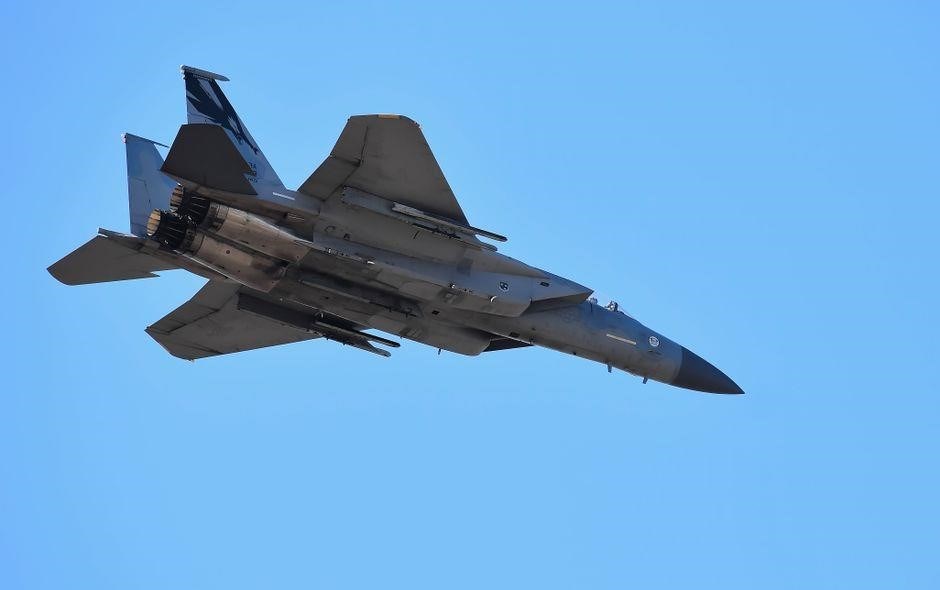
Avionics Suite Overview
The F‑15E’s avionics suite is a highly integrated system that combines advanced radar, navigation, and weapons management to provide situational awareness and precision strike capability. Central to the suite is the AN/APG‑82(V) radar, a multi‑mode phased‑array system that offers simultaneous air‑to‑air and air‑to‑ground modes, enabling the pilot to detect, track, and engage multiple targets while maintaining terrain clearance. The radar’s pulse‑Doppler processing and synthetic aperture imaging provide high‑resolution target identification even in cluttered environments.
Complementing the radar is the Integrated Mission Computer (IMC), which serves as the aircraft’s flight‑control brain. The IMC processes sensor data, manages flight‑control surfaces, and interfaces with the Tactical Targeting System (TTS). The TTS provides the pilot with a graphical representation of the battlefield, allowing rapid target selection and weapons assignment. Together, the radar, IMC, and TTS form a cohesive network that supports both air superiority and strike missions.
Other key avionics components include the Flight Management System (FMS), which automates navigation and fuel management; the Electronic Warfare Suite, which detects and counters enemy radar; and the Data Link System, which facilitates secure communication with ground stations and other aircraft. The cockpit displays are integrated into a single glass cockpit, providing the pilot with real‑time information on aircraft status, weapons loadout, and mission objectives.
Maintenance of the avionics suite is governed by strict procedures outlined in the manual, ensuring reliability and readiness for every sortie. The manual also details troubleshooting steps for common faults, such as radar lock loss or IMC error codes, and provides guidance on performing in‑flight diagnostics.
All procedur are designed to maintain the aircraft’s mission readiness the safety standards.
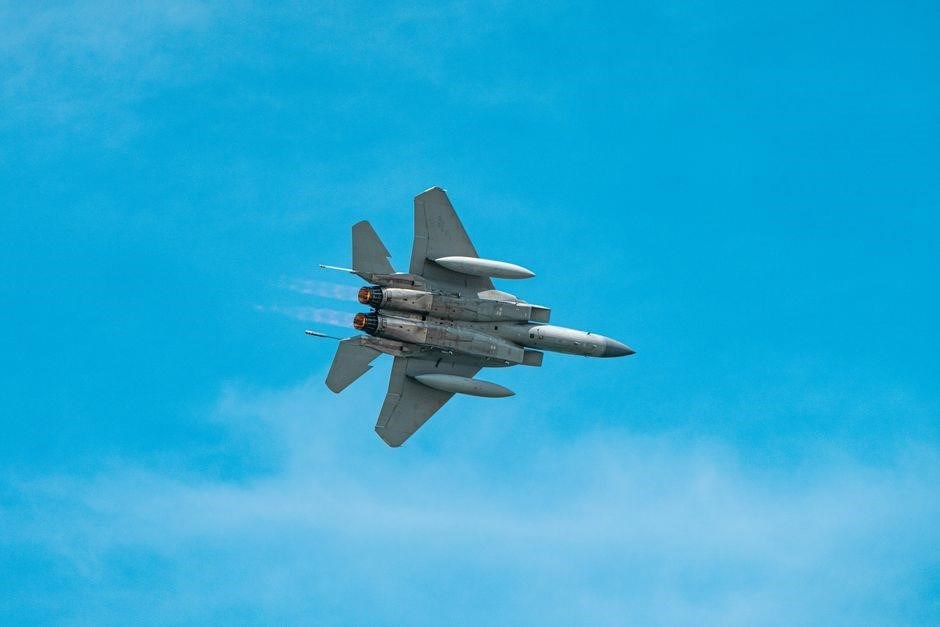
Weapons Integration and Loadout Procedures
The F‑15E Strike Eagle’s weapons integration system is engineered for rapid deployment and precise targeting across missions. Each hardpoint is assigned a unique ID in the Aircraft Weapons Management System (AWMS), verifying compatibility, weight, and balance before any weapon is secured. The loadout procedure begins with a pre‑flight weapons check, during which the pilot confirms the AWMS displays the correct total weight and hardpoint status. Air‑to‑air armament typically includes AIM‑9X Sidewinder and AIM‑120 AMRAAM missiles, each stored in wing hardpoints and managed by the AWMS. For air‑to‑ground missions, the F‑15E can deploy JDAM, GBU‑12, GBU‑32, and GBU‑57, with the manual providing step‑by‑step instructions for arming, configuring the guidance kit, and performing pre‑flight checks. The manual also details the use of the Integrated Mission Computer (IMC) to monitor weapon status and to execute any in‑flight re‑assignment of ordnance. During flight, the pilot can re‑assign weapons via cockpit controls, but the manual cautions that any changes must be logged and verified against the aircraft’s flight‑control software to avoid system conflicts. Post‑mission, the manual outlines procedures for unloading, inspecting, and storing weapons, ensuring that all ordnance is accounted for and ready for the next sortie. The document emphasizes the importance of verifying the integrity of hardpoint brackets, the proper application of the aircraft’s center‑of‑gravity limits, and the use of the Jettison procedure for emergency release of weapons. By following these detailed steps, pilots maintain mission readiness while ensuring safety and compliance with all regulatory requirements. Air‑to‑air armament includes AIM‑9X and AIM‑120 missiles. For air‑to‑ground, the F‑15E deploys JDAM and GBU‑57. The system ensures accurate targeting and safety! All steps ok
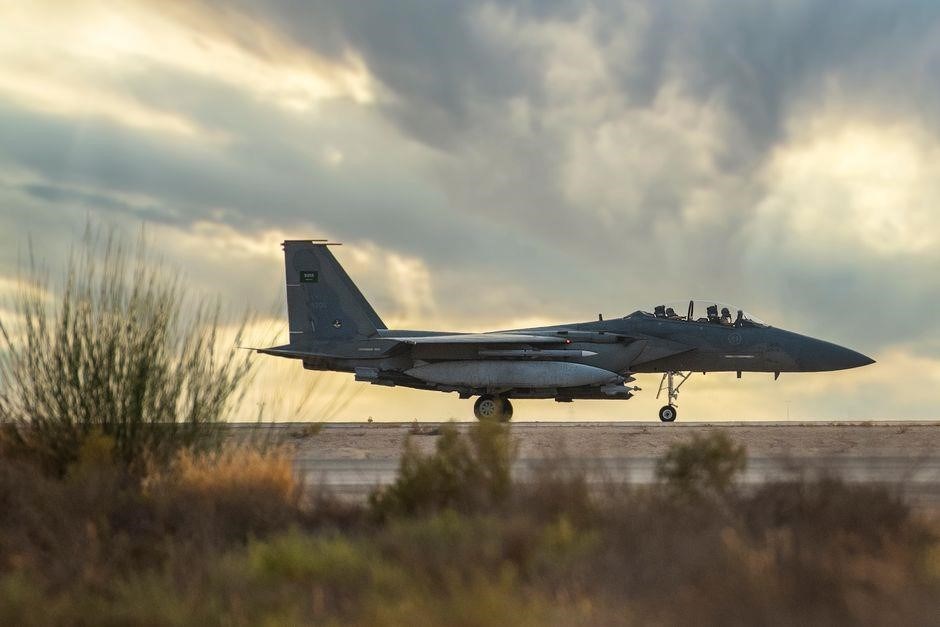
Flight Operations and Mission Planning
The F‑15E Strike Eagle’s flight operations and mission planning framework integrates data into a coherent sortie plan. Prior to departure, the flight commander inputs mission objectives, target coordinates, and threat vectors into the Integrated Mission Computer (IMC), while the flight deck’s navigation system generates a flight plan that balances fuel efficiency, altitude constraints, and restrictions. Weather data, including wind shear, turbulence, and icing potential, are fed into the IMC to adjust climb rates and approach profiles, ensuring compliance with the aircraft’s performance envelopes. During the pre‑flight briefing, the crew reviews the flight plan, verifies the aircraft’s fuel load against the expected mission duration, and confirms that all required navigation aids and communication frequencies are operational. In flight, the IMC continuously monitors fuel consumption, airspeed, and altitude, providing updates to the pilot and allowing re‑routing if new threat information or weather changes arise. The flight plan incorporates coordination with external assets such as AWACS, electronic warfare platforms, and ground support, ensuring that the F‑15E can maintain situational awareness and respond to parameters. Post‑mission, the crew logs flight data, evaluates deviations from the planned route, and updates the mission database to refine planning cycles. This approach guarantees that each sortie is executed with precision, safety, and mission effectiveness at the forefront of operational priorities.—————————————————————
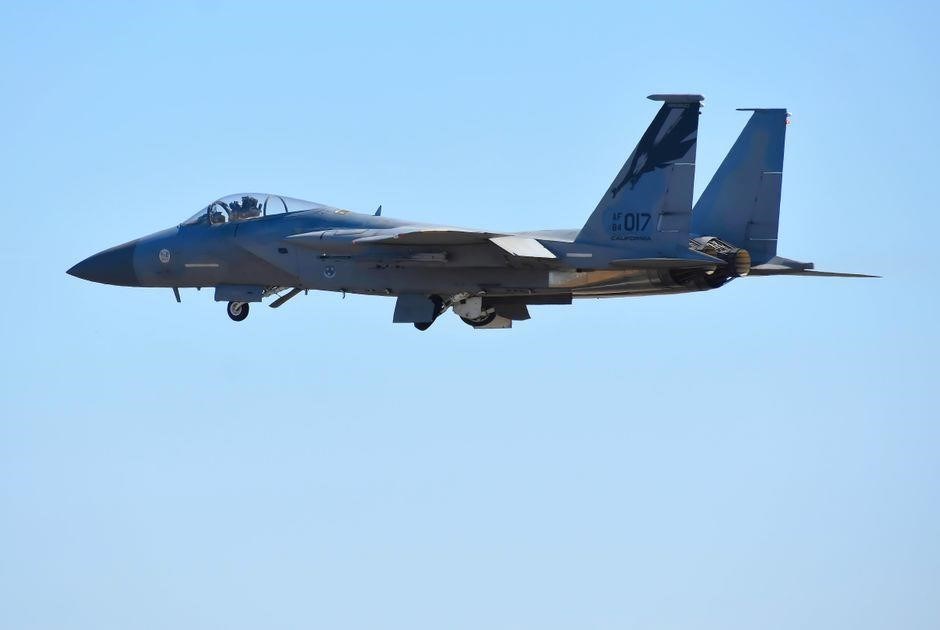
Maintenance and Supplemental Information
The F‑15E Strike Eagle’s maintenance regime is detailed in the 660‑page manual, providing technicians with step‑by‑step procedures for engine, avionics, and airframe upkeep. Each maintenance cycle begins with a pre‑check that verifies the integrity of the Pratt & Whitney F‑100 engine, hydraulic systems, and the aircraft’s electronic warfare suite. The manual’s supplemental sections include troubleshooting guides, schematic diagrams, and a parts list, enabling fault isolation and repair. Technicians follow the prescribed inspection intervals—daily, weekly, and monthly—ensuring that critical components such as the radar, flight‑control computers, and weapons‑release mechanisms remain within operational tolerances. The document also details the use of diagnostic equipment, such as the Integrated Test Equipment and the Aircraft Maintenance Management System, to log maintenance actions and track component life cycles. Additionally, the manual offers guidance on environmental conditioning, corrosion control, and the handling of hazardous materials, all of which are essential for preserving the aircraft’s performance envelope. By adhering to these procedures, maintenance crews maintain the F‑15E’s readiness, safety, and mission effectiveness, thereby extending the platform’s service life and ensuring that each sortie is flown with confidence and reliability. All archived now.
Maintenance crews also inspect the aircraft’s external hardpoints, verifying that weapon pylons and missile launchers remain clean and corrosion‑free. Fuel system checks include pump, filter, and line integrity tests, while avionics software updates are applied during depot maintenance to integrate mission‑critical patches. The manual stresses a rigorous quality‑assurance process, with all work logged in the Aircraft Maintenance Management System and double‑checked by a second technician. Environmental compliance is ensured through proper handling of hazardous fluids, keeping the F‑15E mission‑ready and safe.
Digital Resources and PDF Availability
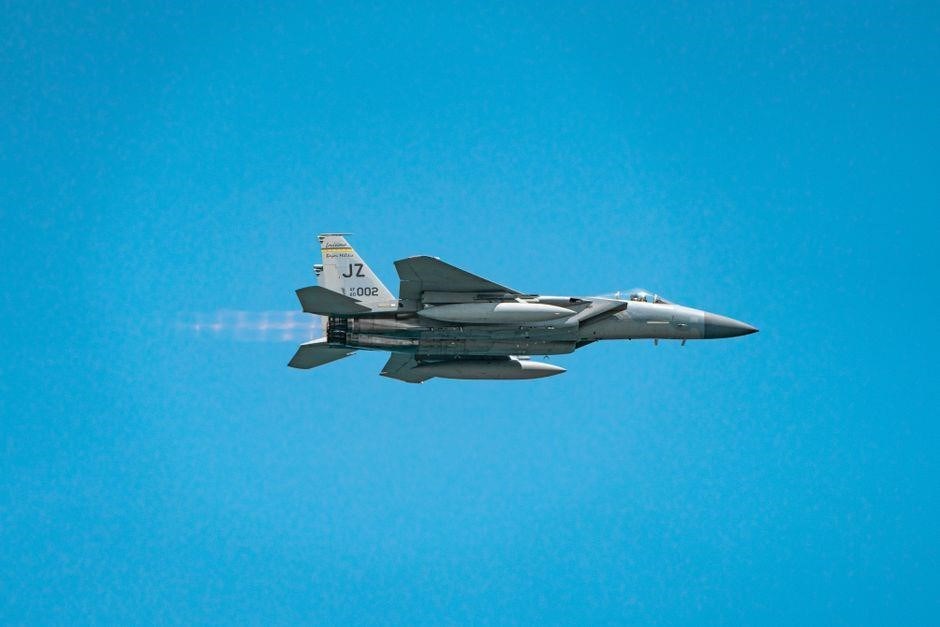
Online repositories now host the F‑15E Strike Eagle Flight Manual in PDF format, allowing pilots, instructors, and maintenance personnel to download the 660‑page unclassified volume for reference and study. The official Air Force website offers a secure portal where authenticated users can request the manual’s latest edition, ensuring that flight crews have access to up‑to‑date procedures and safety updates. In addition, the Defense Logistics Agency’s e‑catalogue lists the manual under ISBN 9781935700432, providing a convenient link to Amazon and other commercial sellers for those who prefer a hard‑copy edition. The PDF is also available through the National Air and Space Intelligence Center’s digital library, where it is archived alongside related flight‑operations documents and maintenance schematics. For simulation enthusiasts, the Digital Combat Simulator (DCS) community hosts a free, early‑access PDF of the F‑15E Flight Manual, which includes annotated sections tailored to the game’s cockpit layout. Users can download the file directly from the DCS website, where it is presented in both English and Spanish to accommodate a global audience. Finally, the U.S. Air Force’s e‑Learning platform hosts a series of interactive modules that incorporate excerpts from the manual, allowing pilots to test their knowledge through quizzes and scenario‑based training. These digital resources collectively ensure that the F‑15E’s operational knowledge remains accessible, up‑to‑date, and compliant with regulatory standards.
Because the manual is classified as unclassified, it can be freely distributed to allied air forces and civilian aviation institutions. The PDF is structured into three volumes, with Volume 1 covering operational procedures, Volume 2 detailing systems and equipment, and Volume 3 providing authoritative pilot guidance. Each volume is searchable, enabling quick navigation to sections such as “Engine Start‑Up,” “Weapon Release,” or “Avionics Check‑List.” The file size is roughly 12 MB, making it suitable for download over standard broadband connections. For archival purposes, the Air Force also maintains a mirrored copy on the Defense Technical Information Center (DTIC), ensuring redundancy in case of primary server outages. The DTIC link includes a checksum for integrity verification, allowing users to confirm that the downloaded PDF matches the official version. Additionally, the manual’s PDF is accompanied by a set of high‑resolution images and schematics that can be extracted for use in training manuals or classroom presentations. The availability of these resources supports continuous professional development for pilots, instructors, and maintenance teams across the U.S. Air Force and its international partners. All PDFs are archived in the Air Force’s digital repository for long‑term preservation for archival!
Bibliographic References and Further Reading
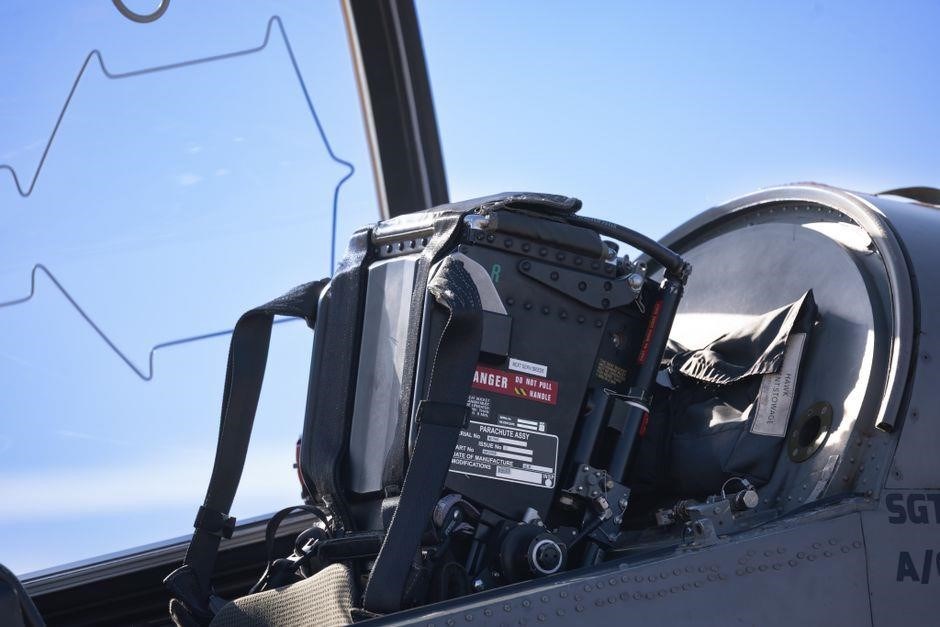
The F‑15E Strike Eagle Flight Manual is the cornerstone of pilot training and operational doctrine. Published in 1990, the 660‑page volume is cataloged under ISBN 9781935700432 and can be downloaded from the Defense Technical Information Center (DTIC) and the National Air and Space Intelligence Center (NASIC). The Air Force’s e‑Learning platform hosts modules that draw directly from the manual, allowing pilots to test knowledge through quizzes. The manual covers operational procedures, systems and equipment, and authoritative pilot guidance. For historical research, the U.S. Air Force Historical Research Agency (AFHRA) archives the edition, accessible via its online catalog. The Defense Logistics Agency’s e‑catalogue lists the manual and links to Amazon. Simulation communities, notably the Digital Combat Simulator (DCS) project, offer an early‑access PDF with annotated sections tailored to the game’s cockpit layout.
Supplementary documents enrich the manual’s utility. The Flight Operations Supplement (FOS) updates procedural changes and is distributed through the Air Force’s Flight Operations System portal. Maintenance crews rely on the Aircraft Maintenance Manual (AMM) 15‑E‑AMM‑1, which provides system checklists and troubleshooting guides that complement the flight manual’s operational focus; the AMM is available via the Maintenance Information System. For avionics, the Air Force Research Laboratory publishes the “F‑15E Avionics Integration Guide” (AIG‑15E), cited in the manual’s Volume 3 under the Avionics chapter. Declassified flight‑test reports from the 1980s and 1990s, archived in the Air Force Digital Library, document the evolution of the F‑15E’s systems and validate the procedures outlined in the manual. These primary sources are indispensable for historians, engineers, and pilots seeking a comprehensive understanding of the aircraft’s operational history.